
Core Services at a Glance
PGP Life Sciences offers end-to-end drug discovery and development services, specializing in API synthesis, Computational and medicinal chemistry, and advanced spectra of biological assays, including CRISPR gene editing and protein analysis. Our pharmaceutical research includes innovative drug delivery, PK/PD profiling, and rigorous quality analysis, with in vivo models for comprehensive preclinical validation.
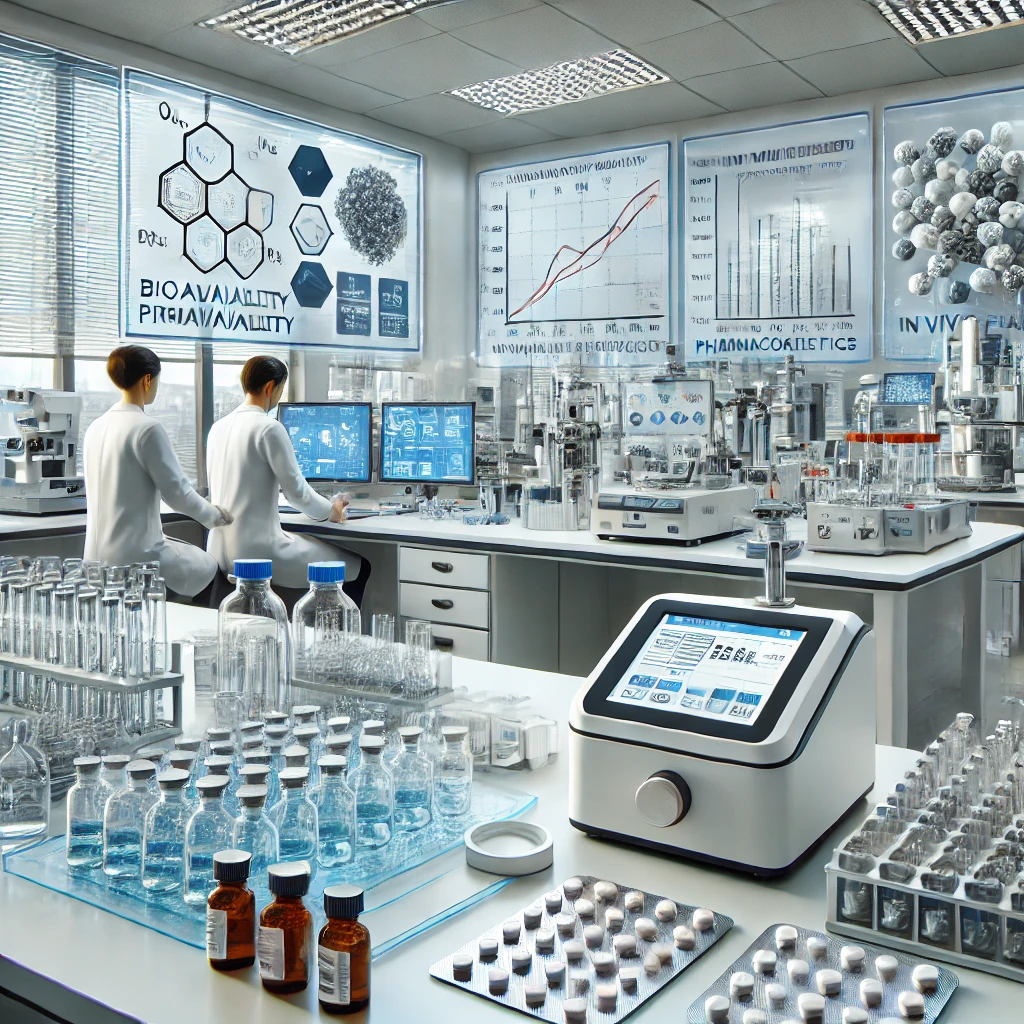
Discovery Chemistry Research Services

Pharmaceutical Chemistry
Expertise in active pharmaceutical ingredient (API) synthesis, polymorph studies, and impurity profiling to support drug development pipelines.
Medicinal Chemistry
Development of novel drug candidates, structure-activity relationship (SAR) studies, and hit-to-lead optimization strategies.
Bioorganic Chemistry
Research in biomolecule conjugation, enzymatic catalysis, and chemical biology for therapeutic development.
Discovery Biology Research Services
Biochemistry & Molecular Biology
protein purification for structural analysis, drug-target interaction studies to assess binding efficiency, and metabolomics for biomarker discovery. Enzyme inhibition and activation studies further validate drug targets. gene expression analysis using techniques like RT-PCR and Western blotting. It also involves CRISPR/Cas9 gene editing for drug testing, recombinant DNA technology to produce therapeutic proteins, and RNA interference to modulate gene function for drug validation.
Zoology
In vivo studies and preclinical models focusing on physiological responses, pharmacological testing, and toxicological evaluation in animal models.
Molecular Biology
PGP Life Sciences offers comprehensive in-vitro biological assays for evaluating drug candidates through cell-based and cell-free systems
Cell-Based Assays
Includes
Proliferation assays (e.g., MTT, XTT) for assessing cell growth
Apoptosis assays (e.g., Annexin V/PI) for detecting programmed cell death
Reporter gene assays using markers like luciferase to monitor cellular responses.
Cytotoxicity tests to measure drug-induced toxicity, including IC50 determination.
Flow cytometry for analyzing drug effects on cell cycle phases.
Cell-Free Assays
Includes
Enzyme activity tests to evaluate kinetics.
Binding assays (e.g., ELISA, SPR) to measure molecular interactions.
Fluorescence-based assays for compound screening
Isothermal titration calorimetry (ITC) for assessing binding thermodynamics.
Pharmaceutical Research & Analysis
Pharmaceutics
Development of novel drug delivery systems, including nanoparticles, liposomes, and niosomes, along with solubility and stability studies.
Pharmacology
In vitro and in vivo pharmacodynamic (PD) and pharmacokinetic (PK) profiling, receptor-ligand binding assays, and efficacy studies.
Pharmaceutical analysis
Ensures product quality and regulatory compliance using advanced techniques. HPLC, UPLC, and GC methods analyze complex mixtures with precision, while spectroscopic tools like UV-Vis, FTIR, and NMR characterize molecules and impurities.